
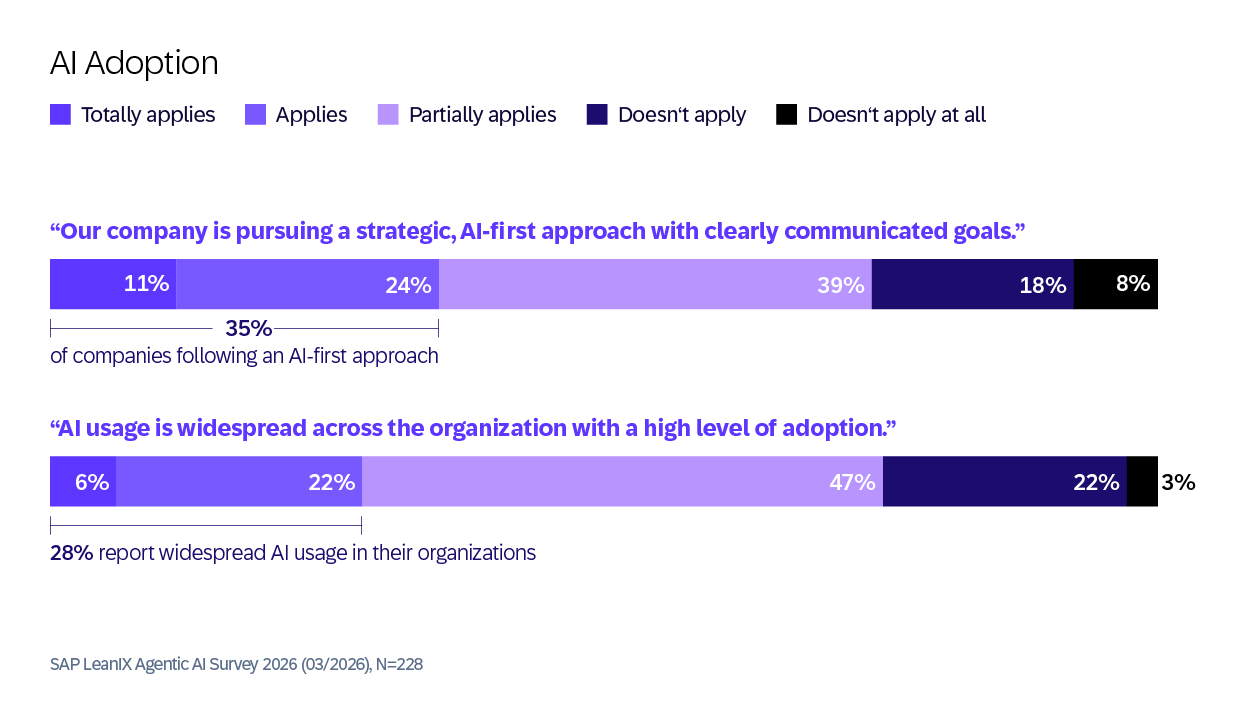
Artificial intelligence has become a part of everyday business operations in companies around the world: 75 percent of the companies surveyed for the "SAP LeanIX Agentic AI Survey 2026" are using AI, with more than a third pursuing a clear, strategic, "AI-first" approach. While 44 percent of firms already utilize AI agents, nearly all those surveyed are at least planning to develop and implement agents. The crucial question, therefore, is no longer whether companies will use AI agents, but how they will manage and account for this powerful innovation.
However, significant gaps are evident precisely in this area. There is a lack of transparency regarding agents in use, particularly when it comes to tracking agent performance, compliance, and return on investment (ROI), both actual and potential.
Although three-quarters of respondents believe that specific guidelines for AI agents are necessary, 48 percent of companies have not clearly defined responsibilities for their management and governance; instead, multiple teams are involved in these efforts.
Enterprise architects (EA) are not at the forefront in this regard: despite possessing the expertise needed to manage AI agents, EAs are currently sidelined in two-thirds of companies—even though 63 percent of respondents view EAs as positioned to strategically drive the adoption and use of artificial intelligence within their organizations.
The present study examines the reasons behind this situation, revealing the untapped potential for enterprise architects to move beyond merely supporting the deployment of agentic AI in their organizations and instead assume a key role in shaping it.
Survey of enterprise architects at companies around the world
As a market-leading provider in the enterprise architecture sector, SAP LeanIX boasts an extensive customer portfolio of companies and organizations around the world. For the "SAP Agentic AI Survey 2026," enterprise architecture leaders from 228 of these companies were surveyed online in March 2026. Seventy percent work for European companies, while another 18 percent are employed by firms in the USA or Canada. Regardless of region, the respondents are evenly distributed across companies of varying sizes, with 37 percent working in organizations with more than 10,000 employees.
AI usage is already part of everyday business
The significance of AI in a business context is evident from the findings: more than a third of respondents state that their companies are pursuing a strategic, "AI-first" approach with clearly defined goals. Overall, 75 percent report using AI within their organizations, with 28 percent describing this usage as extensive. Notably, the larger the company, the more likely it is to have a dedicated AI policy—and the more widespread AI adoption tends to be.
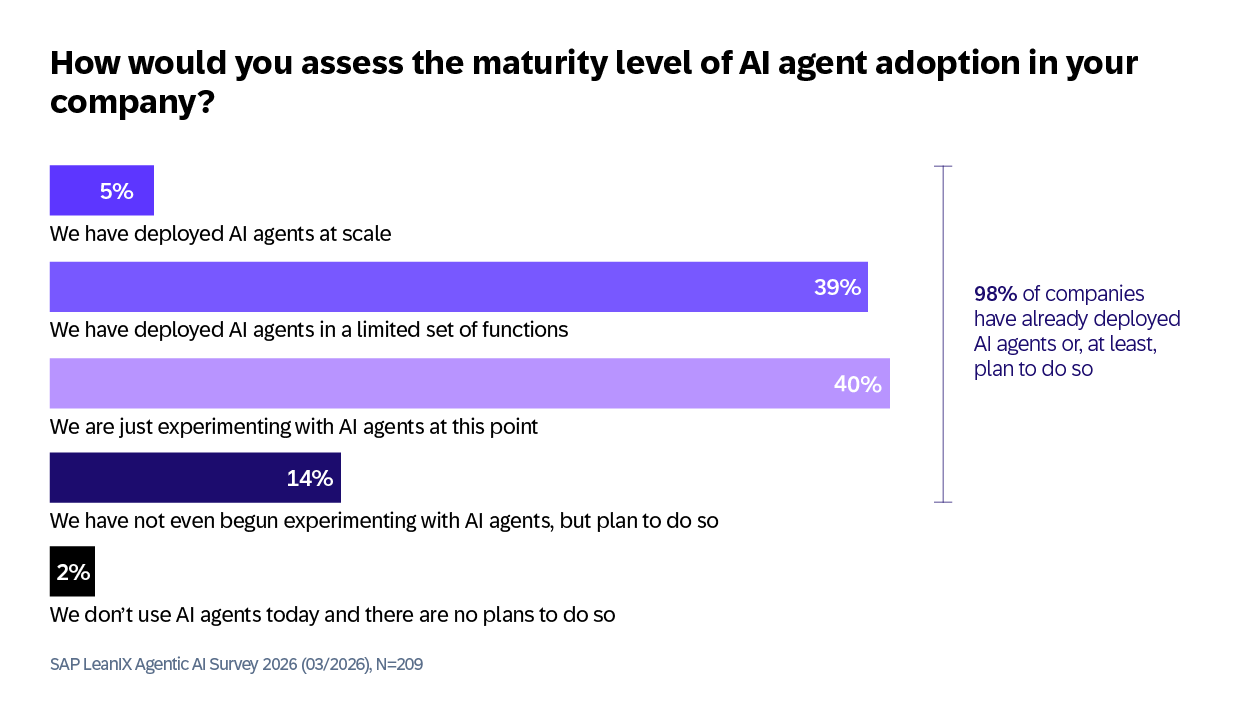
Forty-four percent of the companies surveyed are already deploying AI agents, though the vast majority are currently doing so only within limited functional areas. Almost as many—40 percent—are currently experimenting with AI agents, while another 14 percent plan to do so. It follows that questions regarding AI agents are a relevant for virtually all companies. More than 60 percent of respondents state that agents are being deployed—or are planned for deployment—across multiple functions or departments.
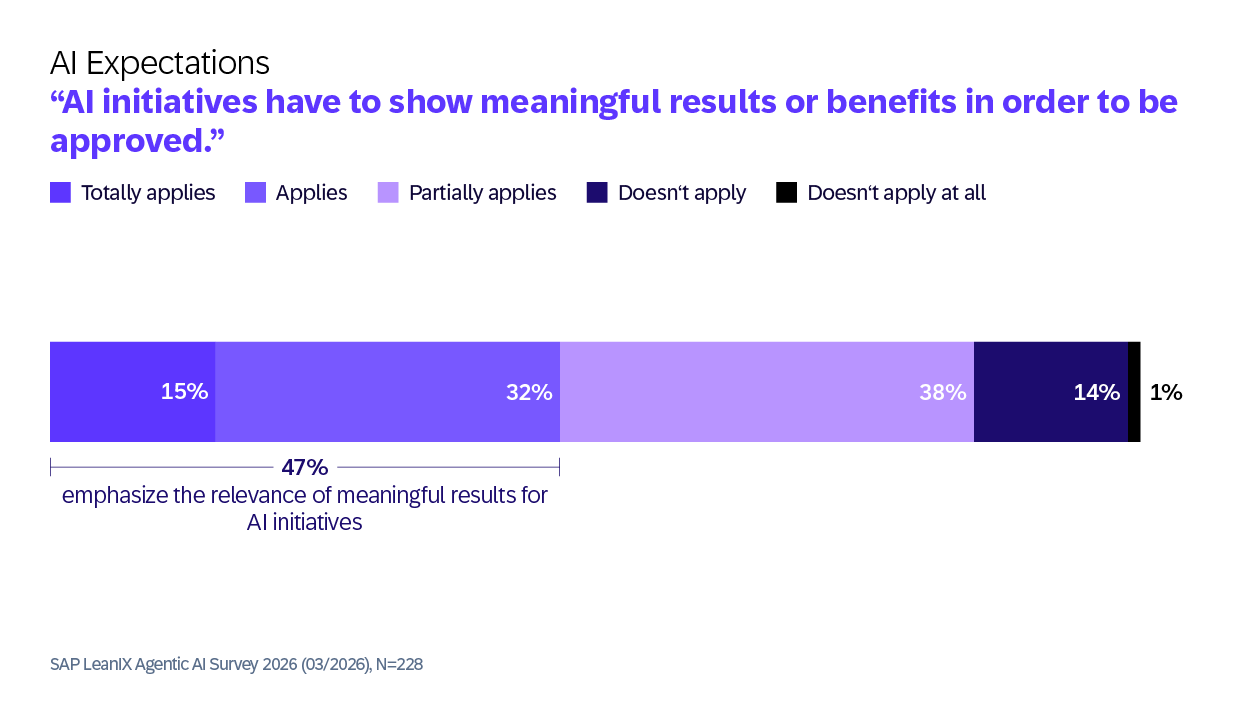
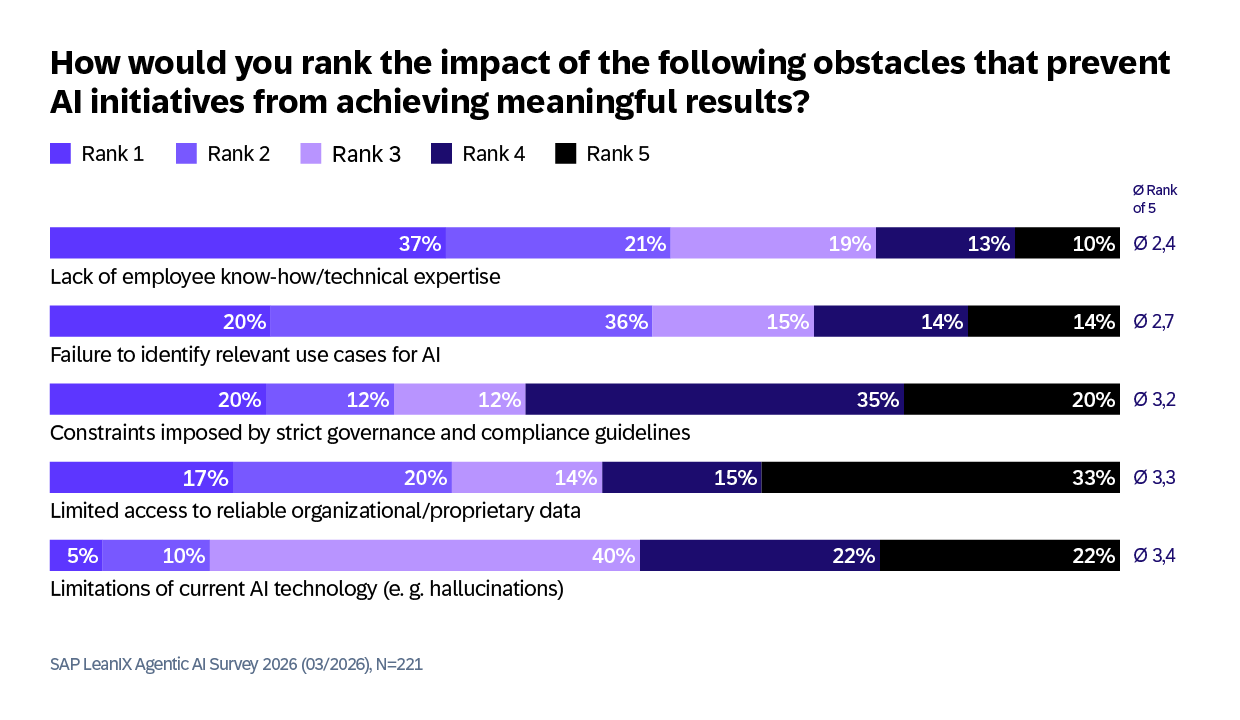
When it comes to the obstacles standing in the way of potential results, 58 percent cite a lack of employee know-how as a primary or secondary factor, closely followed by an inability to identify relevant AI use cases. Respondents far less frequently view overly strict governance and compliance policies or limited access to reliable internal data as hindrances. Inherent limitations of current AI technology are only considered a significant hurdle by 15 percent.
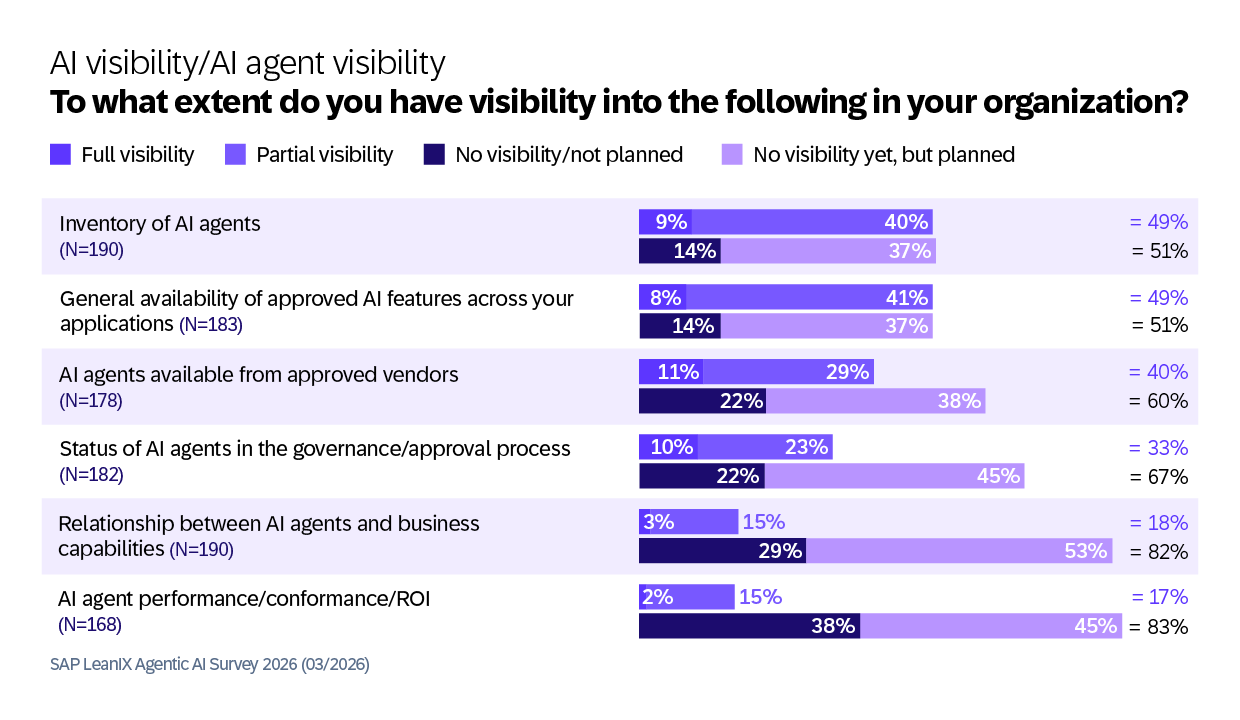
To evaluate the success of AI initiatives, companies first require visibility—after all, you can only measure what you can see.
As it turns, respondents reported major gaps when it comes to visibility. Slightly less than half (49%) of the enterprise architects surveyed report visibility, even if only partial, into the AI agents currently in use or into the availability of AI features offered by existing applications. Forty percent know which AI agents are available through approved vendors, and one-third can provide information on the status of AI agents going through the internal approval process.
However, the vast majority–more than 80 percent–lack insight into how deployed AI agents support business capabilities, how they perform, whether they are compliant, or even what ROI they deliver. Strangely, 38 percent do not even aim to establish visibility regarding these relevant metrics in the future.
AI agent governance is a key topic
Just under three-quarters of respondents consider specific guidelines for the use of AI agents necessary. Twenty-two percent of the enterprise architects surveyed report that their companies have already implemented specific frameworks, while another 51 percent are currently developing such frameworks. Among companies with more than 10,000 employees, nearly 80 percent have established—or are developing—dedicated governance for AI agents. Only a quarter state that they do not plan to create a specific framework, as existing AI guidelines already cover the associated challenges.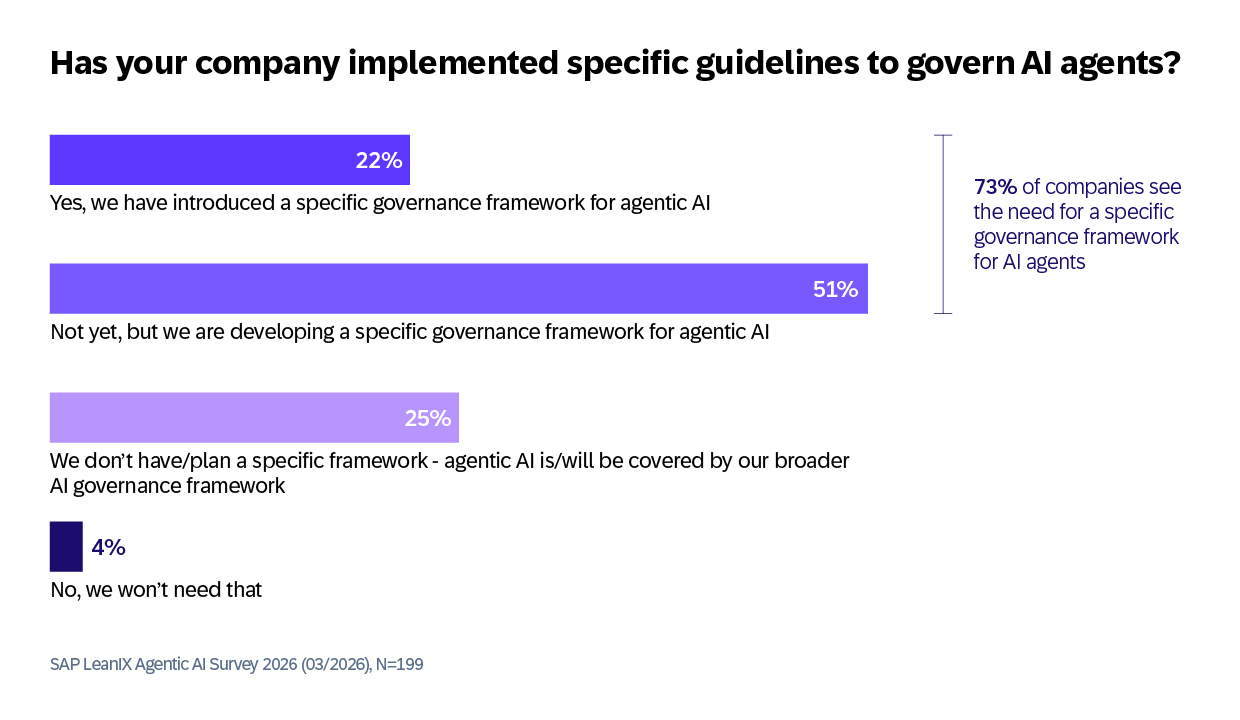
In principle, the use of AI agents is restricted in 77 percent of the companies surveyed, at least at the departmental or business unit level. Respondents most frequently report that agents must undergo prior review by a responsible body (72 percent) and that only AI agents from approved third-party providers—or those developed on authorized platforms—are permitted (52 percent). In 42 percent of organizations, only specific user groups are authorized to deploy or build AI agents.
Management of AI agents characterized by unclear responsibilities
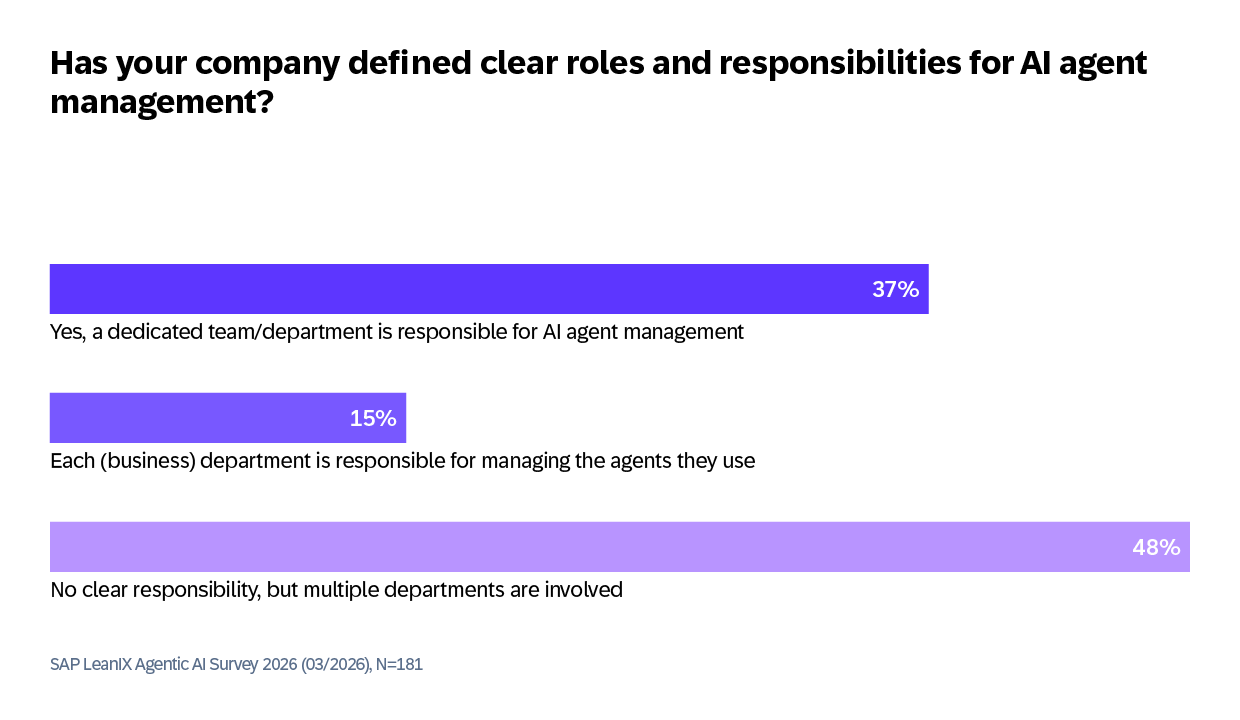
Only 37 percent of the companies surveyed have a clearly designated department or dedicated team responsible for managing AI agents. In 15 percent of cases, the business units themselves are responsible for the agents they deploy. Meanwhile, the majority—48 percent—acknowledge that responsibility is not clearly defined; instead, multiple departments are involved in managing AI agents, with widely varying teams across different companies handling this task simultaneously.
How do enterprise architects view the current arrangements within their companies regarding the management of AI agents? Satisfaction is highest among those working in companies with clearly defined responsibilities for this task. Conversely, it comes as little surprise that most take a critical view of setups involving various teams and departments but lacking fixed areas of responsibility.
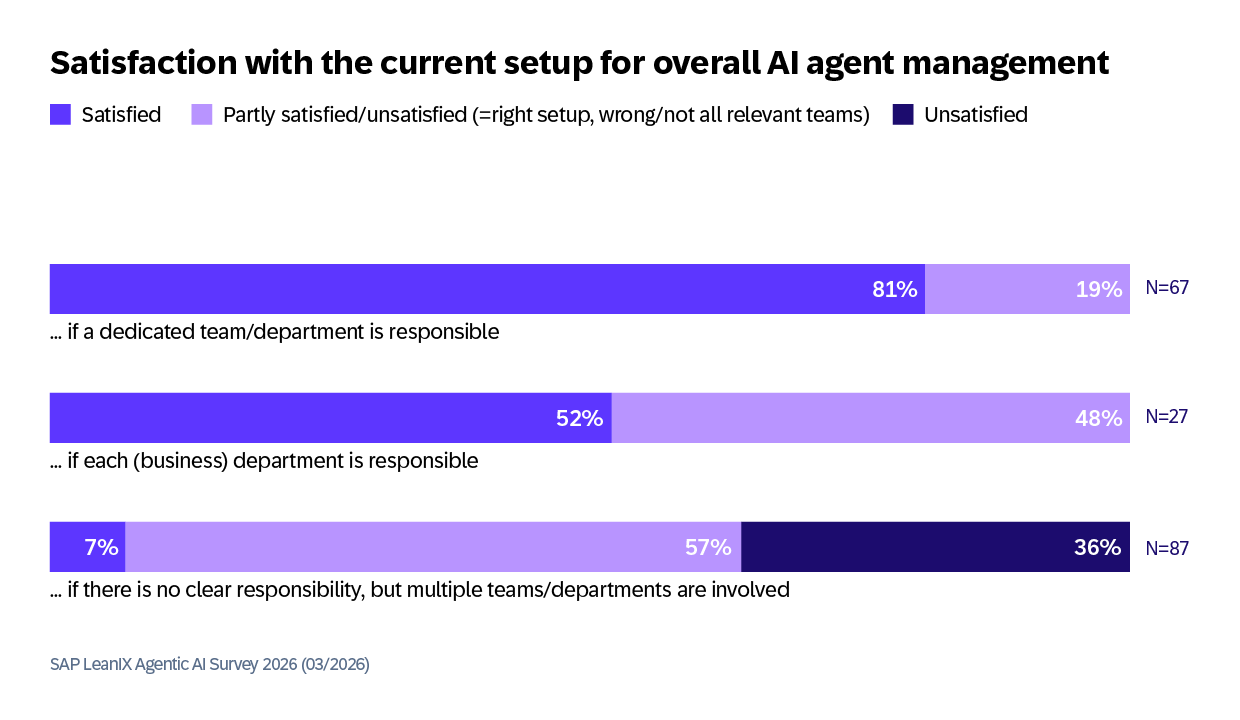
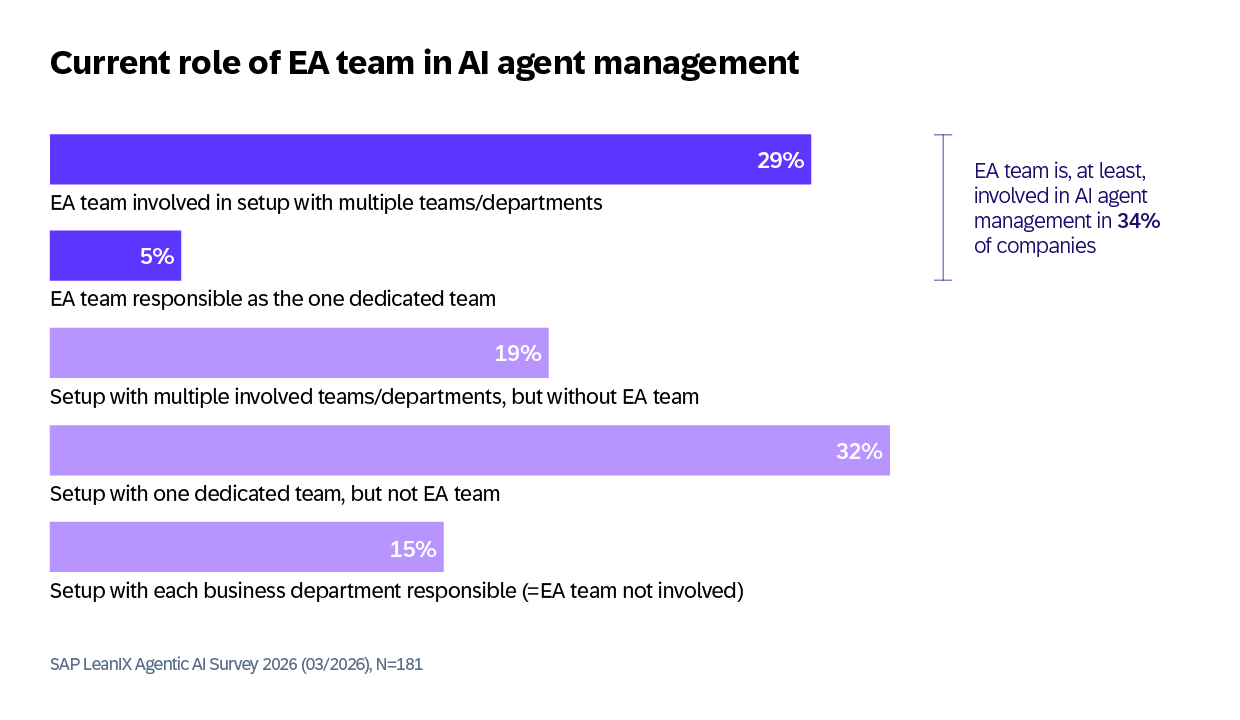
Where there is a clearly designated department in charge, it is most often the IT department. The EA team fills this dedicated role in only 5 percent of cases. Even when responsibilities are unclear and multiple departments are involved, the expertise of enterprise architects is sought less frequently than that of other IT colleagues.
Clearly, there is a significant gap between current corporate reality and the ambitions held by enterprise architects; 63 percent of respondents agree that their practice should be responsible for driving the strategic adoption and governance of AI agents.
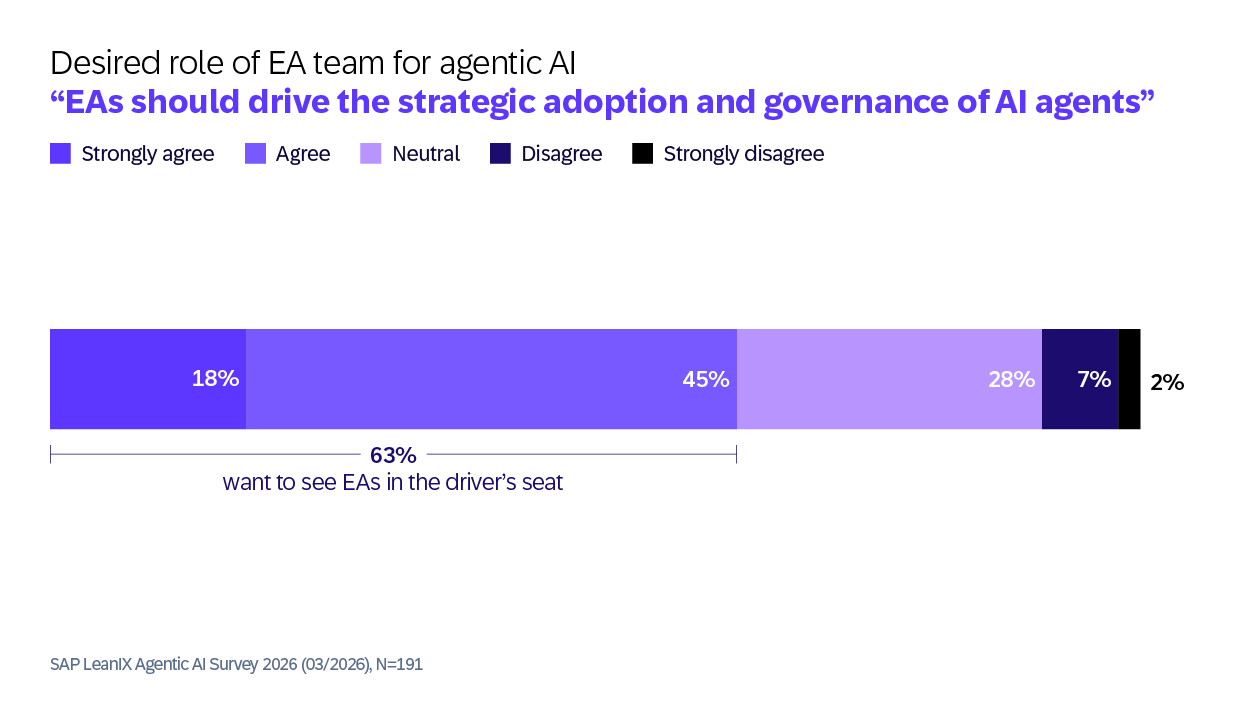
One possible explanation for this discrepancy emerges from examining the data and information deemed essential for managing AI agents—and determining which of these elements the surveyed enterprise architects believe should be maintained by their team.
The enterprise architects primarily emphasize their responsibility for the inventory of AI agents and for information regarding the relationship between agents and business capabilities, tasks that are familiar and comparable to managing an application portfolio. Undoubtedly, this data serves as a crucial foundation for governing AI agents.
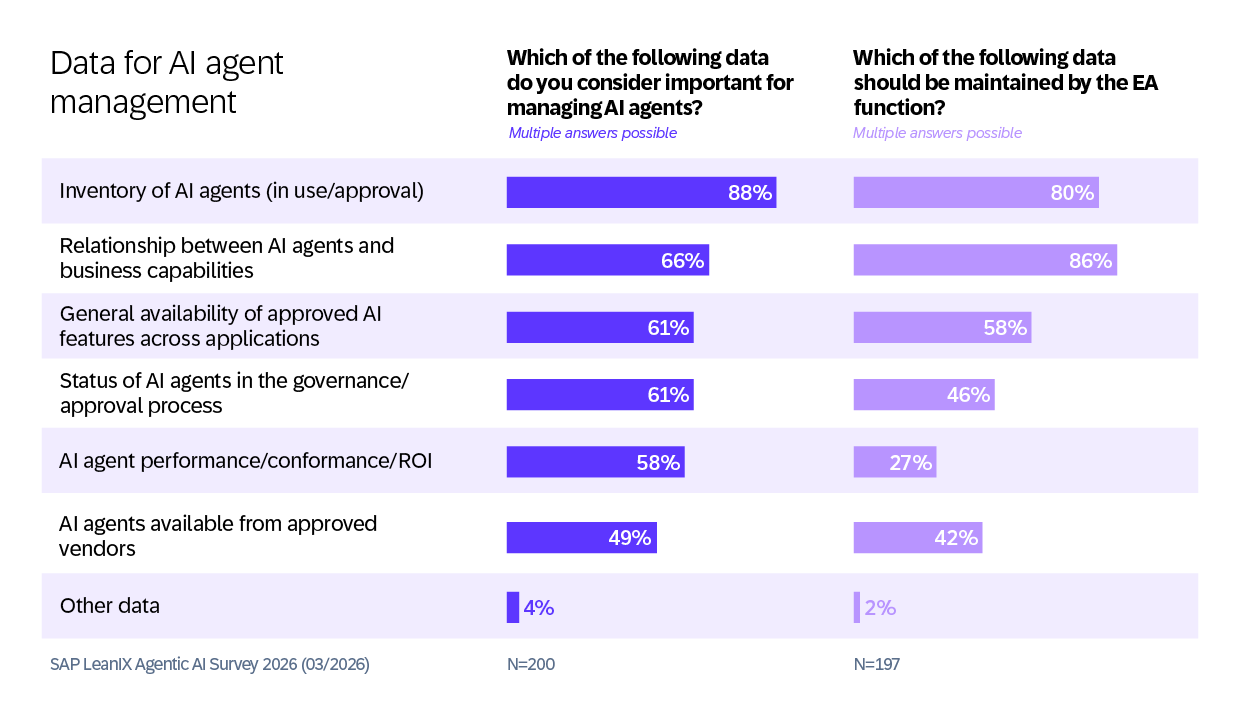
However, when it comes to data regarding an agent's lifecycle, enterprise architects do not view this as their responsibility. While, for the most part respondents believe EAs should be responsible for tracking availability of AI features across applications, fewer believe they should track agents across the governance and approval process (which is odd given the traditional role of EAs in technology governance), it is with regard to AI agent performance that we find the biggest discrepancy. Only 27 percent believe the EA function should take the lead in this area. Given the organizational importance of AI initiatives delivering measurable results, it is hardly surprising that enterprise architects are not currently as involved in managing AI agents as their own professional standards would suggest.
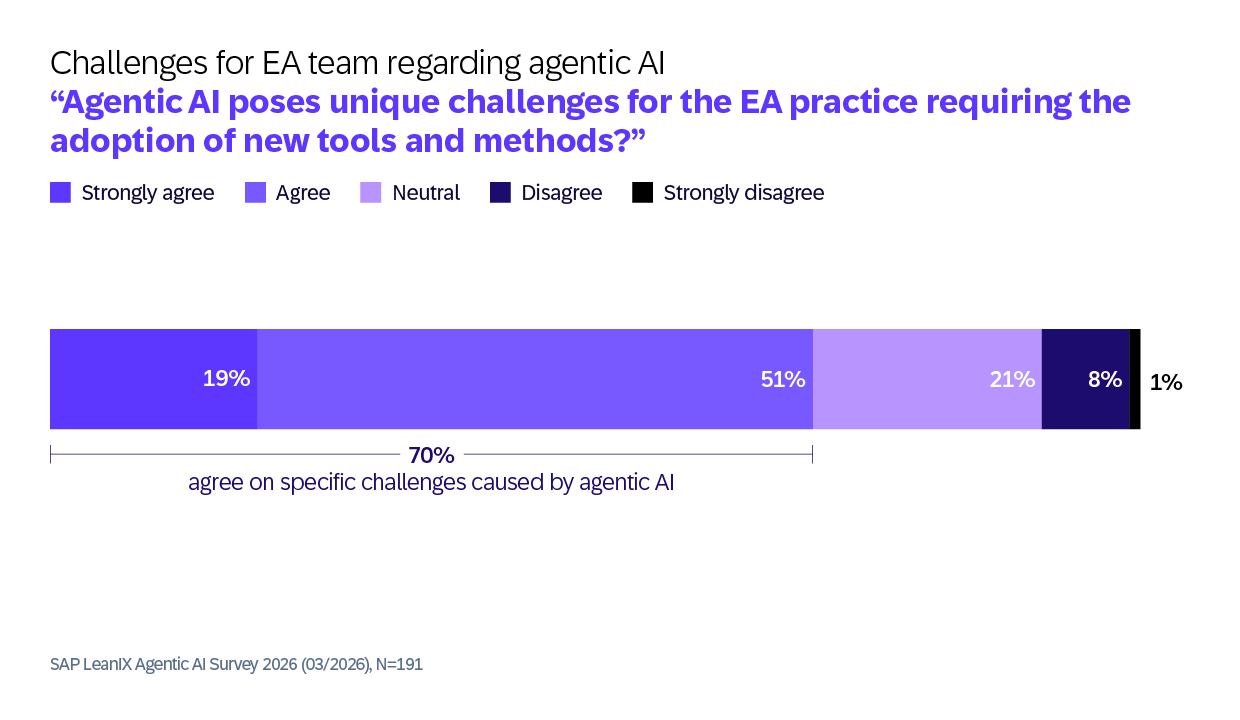
Nevertheless, EAs do recognize the novelty of AI technology and its implications for the EA practice. Seventy percent believe their practice faces unique challenges with this technology and that new tools and methods are required to address these challenges.
Conclusion: Time to step out of the comfort zone and rethink enterprise architecture
The study results clearly show that dealing with AI agents in the enterprise presents challenges for companies. The fact is that artificial intelligence has become part of everyday corporate life—and AI agents are either already being deployed or in the planning stages of deployment. An overwhelming 98 percent of respondents find themselves here.
There is broad consensus that AI agents require specific guidelines and a dedicated governance framework. Yet, there is a lack of clarity regarding who is responsible for managing AI agents within the organization. In most companies, various teams are involved, but responsibilities are not clearly defined.
Enterprise architects could use their expertise to fill precisely this gap—and 63 percent of respondents would like to see their discipline take the lead. However, most companies currently forego this know-how: enterprise architects are involved in AI agent management in only one-third of the companies surveyed.
Why is this the case? One reason may be that EA teams seem reluctant to leave familiar territory. While most acknowledge their responsibility regarding the inventory and the business capabilities linked to AI agents, that alone is insufficient for successful AI agent management. Yet, enterprise architects who step out of their comfort zone, evolve the discipline, and address the entire lifecycle of AI agents can play a key strategic role within the company in this new era.
SAP LeanIX Agentic AI Survey 2026: More information about the study
In March 2026, SAP LeanIX conducted an online survey of 228 enterprise architects and IT decision-makers from internationally active customer organizations regarding the adoption and management of artificial intelligence—and AI agents in particular. The sample is balanced in terms of company size. 70 percent of the respondents are from companies in Europe, while another 18 percent are from the USA and Canada.
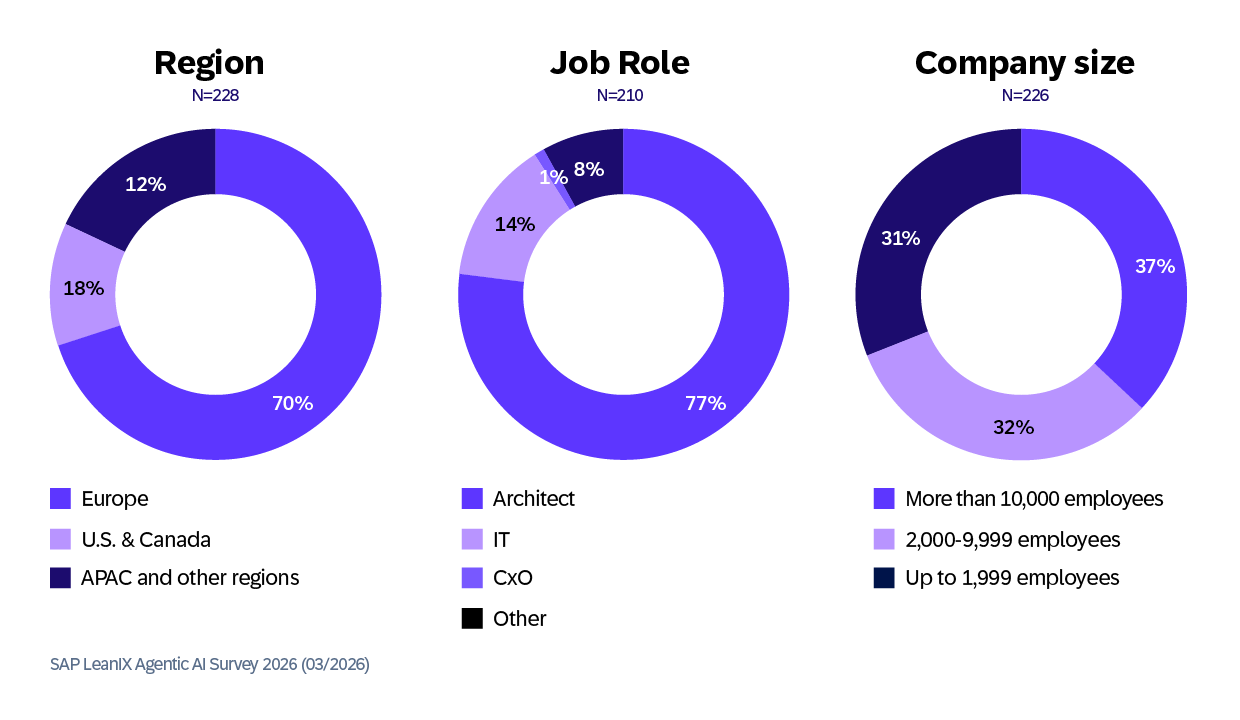
Differences in the number of respondents represented in the charts result from the exclusion of respondents who could not/would not provide information on individual topics. For better readability, the results in this report are presented as percentage values without decimal places.