Best Practices to Define Business Capability Maps
See how IT and business align with a complete overview of your business capability landscape.
LeanIX Enterprise Architecture
Build and transform technology landscapes to support evolving business strategies and operationalize innovation.
Learn moreDiscover, manage, and govern AI agents across the organization
SAP LeanIX Customers
A growing list of industry leaders and organizations of all sizes who trust in SAP LeanIX
See Full ListMaximize market potential through a partner program offering LeanIX solutions tailored to your business model.
Learn moreTake your capabilities to the next level and arm yourself with the knowledge you need
See all resourcesBusiness objectives set the direction for all enterprise architecture decisions. This page explains how objectives shape capability mapping, guide prioritization, and create alignment between business strategy and IT execution.
Every transformation starts with clarity about what the organization aims to achieve. Business objectives define this direction. They articulate the outcomes the company is working toward — whether improving customer experience, expanding into new markets, reducing operational complexity, or modernizing core systems.
In enterprise architecture, objectives sit at the top of the strategic stack. They shape how the business capability model is structured, guide prioritization during planning cycles, and ensure that technology decisions support measurable business outcomes. Without well-defined objectives, capability mapping often becomes a technical exercise that lacks strategic relevance.
This is why defining business objectives is the first step before creating or refining a capability map. Clear objectives allow teams to translate strategy into the language of business capabilities, ensuring that the map reflects what truly matters to the organization. They also provide the foundation for downstream steps in business architecture, such as capability assessments, initiative planning, and roadmap creation.
By aligning on objectives upfront, business and IT teams work from a shared understanding of priorities — creating stronger accountability, better decisions, and a direct line of sight from strategy to execution.
📚 Related: 2025 Gartner® Magic Quadrant™ for Enterprise Architecture Tools
Business objectives describe the outcomes the organization needs to achieve within a strategic cycle. They translate broad ambitions into clear target states that guide priorities across business and IT.
In enterprise architecture, business objectives act as the starting point for aligning strategy with capabilities, processes, applications, and technology.
Unlike KPIs, which measure performance, or initiatives, which represent specific projects, business objectives define what must be achieved before planning how to deliver it.
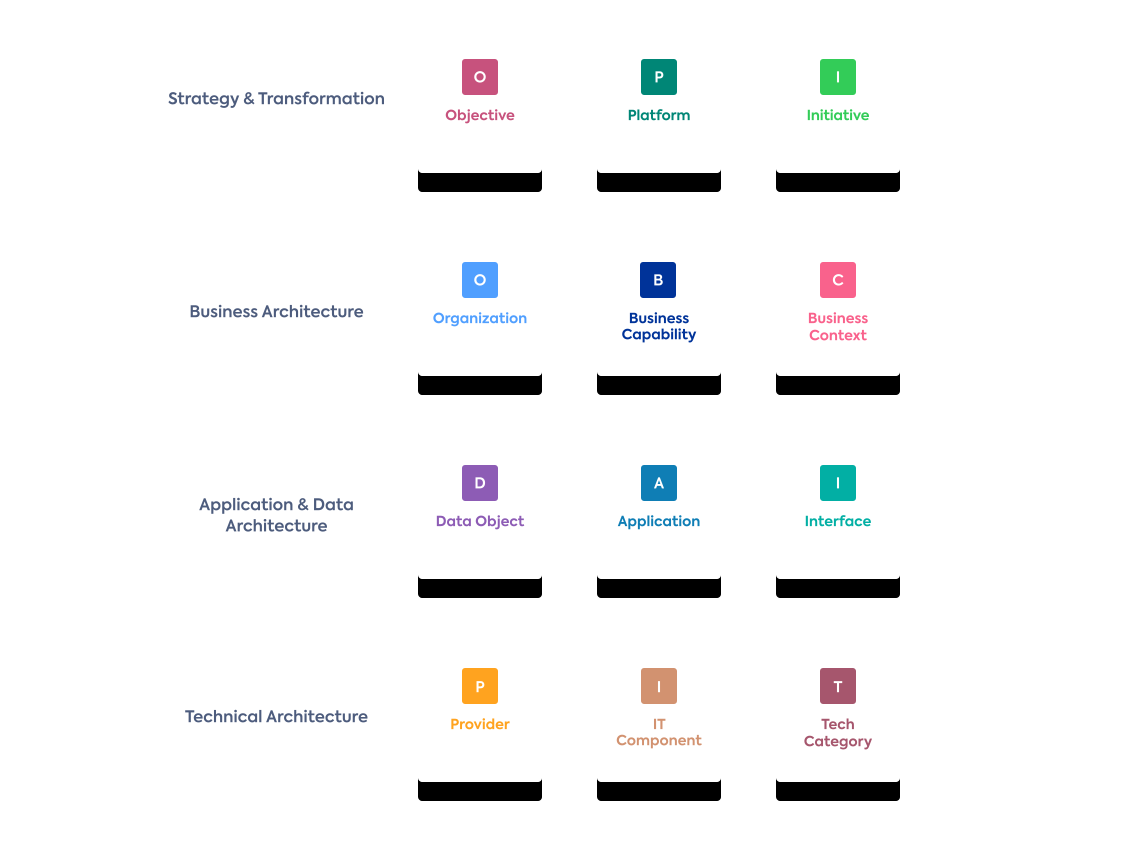
Business objectives anchor the Strategy & Transformation layer in the SAP LeanIX model, connecting directly to downstream elements such as platforms, capabilities, and initiatives.
A simple distinction helps clarify their role:
A company sets the objective to increase recurring revenue. This objective informs:
Clear business objectives give capability mapping its purpose and direction. They ensure that the resulting capability model reflects real strategic needs rather than departmental structures or existing system landscapes. Without this context, capability mapping risks becoming disconnected from the transformation agenda.
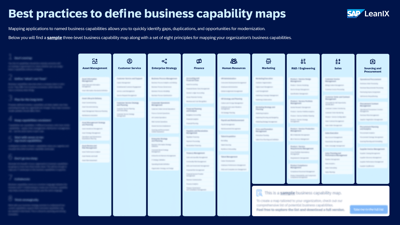
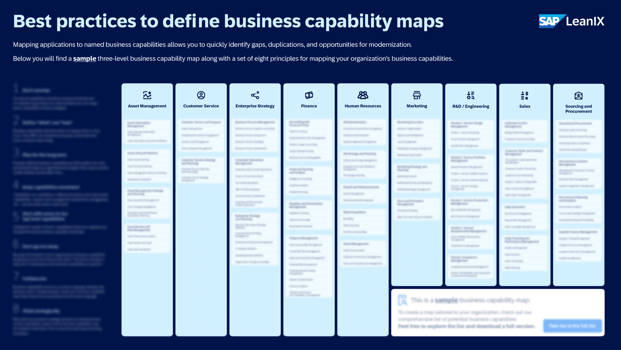
Poster
Optimizing your enterprise architecture begins with a structured overview.
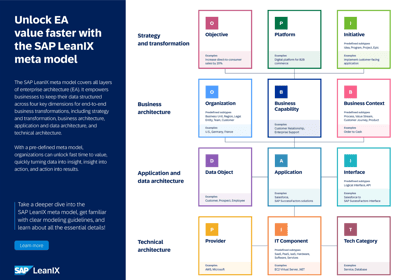
Defining business objectives is a collaborative process that translates strategy into clear, outcome-oriented statements. These objectives must be specific enough to guide decisions, yet broad enough to apply across capabilities, processes, and technology domains.
The following steps offer a simple, repeatable approach that works for both business-led and IT-led planning cycles.
Start by reviewing the organization’s strategic documents, annual plans, and OKRs. Look for themes such as growth, operational efficiency, customer experience, compliance, or modernization.
These themes provide the direction that business objectives must reflect. When working closely with corporate strategy or business unit leaders, clarify which outcomes matter most in the upcoming cycle.
Translate strategic themes into concise objectives that describe what the organization must achieve.
For example, “improve digital customer experience,” “increase recurring revenue,” or “reduce operational complexity.” Good objectives stay outcome-focused and avoid specifying solutions or activities.
Avoid turning objectives into KPIs. Objectives should guide capabilities, not measure them.
Review draft objectives with business leaders, enterprise architects, and transformation or portfolio teams. Validation ensures that each objective is achievable, meaningful, and aligned across teams.
This step also helps avoid conflicting priorities or duplicated efforts. Clear definitions at this point support consistent use across business capabilities, initiatives, and roadmap discussions.
Business objectives should be directional but still measurable enough to steer planning. For example, “expand ecommerce revenue” provides clear focus even before specific metrics are defined.
Measurable objectives help determine which capabilities require attention, which applications need modernization, and where investment is most urgent.
Business capability mapping becomes meaningful only when it is guided by well-defined objectives.
Objectives determine which parts of the business matter most, how capabilities should be structured, and where the organization must improve or invest. Without this strategic context, capability maps risk becoming technical inventories rather than tools for transformation.
Objectives shape capability mapping in several ways:
When objectives and capabilities are connected in this way, enterprise architecture provides a structured framework for business–IT alignment, enabling decisions that are transparent, measurable, and strategy-driven.
Once business objectives are defined, they become the anchor for planning how the organization will change. Objectives highlight which capabilities matter most, where the biggest gaps exist, and which areas require investment. This connection allows transformation efforts to move from high-level intent to concrete actions.
Objectives influence planning in three ways:
Enterprise architecture platforms such as SAP LeanIX support this flow by linking objectives with capability health, application lifecycle information, and planned initiatives, ensuring that roadmap decisions consistently reflect strategic intent and not just operational needs.
Free poster
See how IT and business align with a complete overview of your business capability landscape.
What is a business objective?
A business objective is an outcome the organization aims to achieve within a strategic period. In enterprise architecture, objectives provide the direction for capability mapping, initiative planning, and roadmap decisions.
What is the role of business objectives in enterprise architecture?
Objectives sit at the top of the strategic stack. They guide which business capabilities matter most, influence capability assessments, and shape how architecture supports transformation.
How do business objectives relate to capability mapping?
Objectives define what the business needs to accomplish, while capabilities describe what the business must be able to do. Capability mapping uses objectives as the starting point, ensuring the capability model aligns directly with strategy. More details are available in the guide on how to create a business capability map.
Who should define business objectives?
Objectives are typically defined by business leadership in collaboration with strategy, finance, and enterprise architecture. IT teams contribute by assessing feasibility and linking objectives to capabilities, applications, and transformation plans.
How many business objectives should an organization define?
Most organizations work with a small set of strategic objectives—usually between three and seven. Too many dilute focus; too few make prioritization difficult. The goal is clarity and alignment, not volume.
See how IT and business align with a complete overview of your business capability landscape.